
Germany’s 18-Month Post-Study Permit: What Indian Students Often Get Wrong
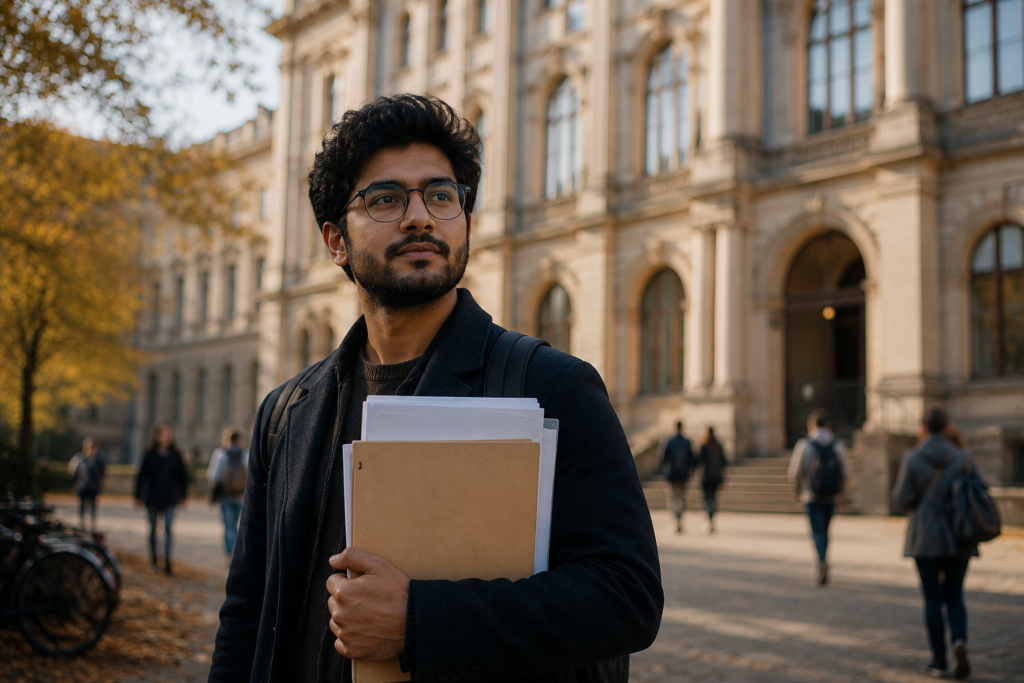
Germany has, over the past few years, become the most popular European destination for Indian students. The numbers confirm it: according to DAAD, nearly 59,420 Indian students were enrolled at German universities in the 2024/25 winter semester — the largest group among all international students, and a 20 percent increase on the previous year. In five years, that number has grown by 138 percent.
This is not a coincidence. Germany offers tuition-free or low-cost education at public universities, a strong job market, and — perhaps the single biggest draw — the possibility of staying back after graduation to build a career. At the centre of this is the 18-month post-study permit, a provision under German law that allows graduates of German universities to remain in the country and look for work.
It is a genuinely strong provision. But it is also one of the most frequently misunderstood parts of the entire Germany study pathway — particularly among Indian students who are still in the middle of their degree when they first encounter it. The confusion is understandable. Information about it circulates widely, but often imprecisely, and the gaps between what students believe and what the law actually says can create real problems at a critical moment.
This article is about those gaps.
What This Permit Actually Is
The 18-month post-study permit is not a visa you apply for from India. It is a residence status that graduates of German universities can switch to, without leaving Germany, immediately after completing their degree.
Under Section 20(3) No. 1 of the German Residence Act (Aufenthaltsgesetz), graduates who have been studying in Germany on a valid student residence permit (§16b AufenthG) are entitled to remain in Germany for up to 18 months to seek qualified employment, provided they can demonstrate that their living costs are covered during that period.
It is important to distinguish this from the Chancenkarte — the Opportunity Card — which is a points-based permit introduced under Germany’s Skilled Immigration Act for people outside Germany who want to enter the country and look for work. That is a separate mechanism. The post-study permit discussed here is specifically for those who have already studied in Germany and completed a recognised degree.
This distinction matters because the rights attached to each are different.
The Most Common Misunderstandings
1. The 18 Months Starts at Graduation, Not When the Permit Is Issued
This is, perhaps, the most consequential misunderstanding. The 18-month window begins at the point of graduation — from the date your studies are officially completed — not from the date your new residence permit is stamped or issued by the Ausländerbehörde (the local foreigners’ authority, which handles all residence permit matters).
If a graduate delays applying for the post-study permit — perhaps spending weeks after graduation travelling, or simply not realising the urgency — those weeks are still counted against the 18 months. The BAMF (Germany’s Federal Office for Migration and Refugees) is clear that the status change must happen immediately after successfully completing studies. Waiting without valid reason can complicate the application and, more practically, wastes time.
For students from Kerala and across India, this has an added layer of complexity. Many students spend time after graduation visiting family, or returning home briefly — which can make the transition period messy if it is not planned in advance.
2. It Cannot Be Extended
The post-study permit under §20 is issued for up to 18 months and is not renewable. This is stated explicitly in German law and confirmed by the BAMF.
This means: if the 18 months expire and you have not secured a qualifying job and converted to a work-based residence permit, your legal right to stay in Germany ends. There is no extension, no buffer, and no second chance at the same permit.
Many students — particularly those in the middle of their degree — carry an impression that the permit is renewable or that extensions can be negotiated. This impression is incorrect. Treating the 18 months as a flexible runway rather than a fixed deadline is one of the most serious errors a graduate can make.
3. You Can Work During This Period — But This Is Not the Goal
Here is something that surprises many students: during the 18-month post-study period, graduates are permitted to take up employment without restriction — including jobs that are completely unrelated to their field of study. Make it in Germany, Germany’s official skilled immigration portal, notes that graduates can work as temporary employees or helpers to secure their livelihood during this period.
This is actually a significant advantage over the job-seeker visa pathway from outside Germany, where work restrictions are tighter.
However — and this is the part that trips people up — working any available job during these 18 months is a financial tool, not the end goal. The purpose of the permit is to find a qualified job, meaning employment that corresponds to your degree. If you spend the 18 months working unrelated jobs and do not secure a qualifying position, the permit still expires and cannot be extended.
Some graduates fall into a comfortable routine of part-time work and passive job searching, without realising they are using up their window.
4. The Job You Need to Find Must Match Your Qualification
To convert from the post-study permit to a proper work-based residence permit — either the EU Blue Card or the §18b residence permit for qualified professionals — the job must correspond to the academic qualification you obtained in Germany.
A computer science graduate cannot convert using a logistics or hospitality job, even if they held that job throughout the 18 months. The work-based permit requires evidence that the role is being performed using the skills and knowledge from the degree.
This is what “qualifying job” means in the German legal sense: not simply a job, but a job in a qualified field that aligns with your university education.
5. Financial Proof Is Required
To be granted the post-study permit in the first place, graduates must demonstrate that their livelihood is ensured throughout the 18-month period. This can be done through a blocked account, regular income, or a formal declaration of commitment from a third party.
The required amount is approximately €1,027 per month — or roughly ₹1.14 lakh per month at current exchange rates (as of May 2026, €1 ≈ ₹111). For the full 18 months, this means demonstrating access to approximately ₹20.5 lakh in total.
For many Malayalee families who fund their children’s education abroad — often through savings, property loans, or family support — this is a figure worth understanding clearly before the degree ends, not after.
What a Qualifying Job Looks Like in Practice
Once the 18-month post-study permit is active, most Indian graduates are looking to transition to one of two work-based statuses.
The most common pathway for university graduates with a job offer is the EU Blue Card, which requires a minimum annual gross salary. For 2026, the threshold for general roles is €50,700 (approximately ₹56.3 lakh per year). For recent graduates — those who completed their degree within the past three years — or for roles in shortage occupations, the threshold is lower: €45,934.20 per year (approximately ₹51 lakh per year), according to the European Commission’s EU Blue Card portal.
The second pathway is the standard work visa for qualified professionals under §18b of the Residence Act, which does not have a strict salary floor but does require that the role matches the degree.
Both pathways offer a route to a settlement permit (permanent residence) after two years of qualifying employment. This is the longer-term picture that many Indian families are actually interested in — and it begins with finding the right job within the 18-month window.
Why This Matters for Students Mid-Degree
The confusion around this permit often happens because students encounter the information early — sometimes before they have even started their first semester — and then do not return to it until the degree is almost over. By then, the 18 months feel abstract and distant. The reality is that preparation for the post-study period should begin during the degree, not after.
This includes building German language skills, which significantly expand the pool of qualifying employers. It includes building networks within the industry of study, attending career fairs at German universities, and understanding — specifically, not vaguely — what a qualifying job in your field looks like and what salary it typically carries.
Germany’s labour market has genuine openings for qualified professionals in engineering, technology, healthcare, and a number of other fields. The Federal Employment Agency’s job board lists active vacancies, and the Make it in Germany portal provides sector-specific guidance. But 18 months, when spent systematically, is a reasonable window. Spent passively, it can disappear quickly.
For students from Kerala, there is one particular family dynamic worth noting. Many families back home understand the post-study period as simply “the time you get to find a job” — a vague buffer after graduation. The reality is more structured, and more time-bound, than that framing suggests. A clear explanation of these boundaries, shared early with family members who are part of the funding decision, can prevent assumptions that lead to poor planning.
What German Law Actually Rewards
Stepping back, it is worth recognising that the 18-month post-study permit is genuinely generous by international standards. Many countries offer far shorter windows — or none at all — for graduates of their institutions. The fact that Germany allows graduates to work freely during this period, switch to work permits without leaving the country, and access PR after just two years of qualifying employment is a real and substantive offer.
But it is structured like a contract, not an entitlement. The German system rewards those who understand its terms clearly and act on them deliberately.
Indian students are, as a group, some of the most successful international students in Germany — both academically and in terms of staying on post-graduation. According to Make it in Germany, international graduates with German degrees are increasingly valued precisely because of their combination of academic qualification and cultural familiarity with the German workplace. Employers notice the difference.
The opportunity is real. The misunderstanding of it, however, is also real — and fixable.
A Note on Application Timing
One practical point that often gets lost: the application for the post-study permit must be submitted to the local Ausländerbehörde (foreigners’ authority) in the city where the graduate lives. Wait times at these offices vary significantly depending on the city. In Berlin, Munich, and Frankfurt, appointment backlogs can run to several weeks.
Graduates should begin arranging their appointment before their student permit expires — not after. This is another reason why preparation during the final semester, rather than scrambling after graduation, makes a meaningful difference.
Conclusion
The 18-month post-study permit is one of the genuinely compelling reasons to pursue a degree in Germany. But it is not a passive safety net. It has a fixed, non-renewable timeline that begins at graduation. It requires financial proof. It allows any work to cover costs, but demands a qualifying job to transition forward. And the job that matters — the one that leads to an EU Blue Card or a work visa — must match the degree.
Understanding these conditions clearly, and preparing for them during the degree rather than after, is the difference between using this window well and being caught off guard by it.
Germany’s offer to international graduates is strong. Meeting it with equal clarity and preparation is what makes it count.