
Why Some Indians Are Quietly Choosing Vienna Over Berlin
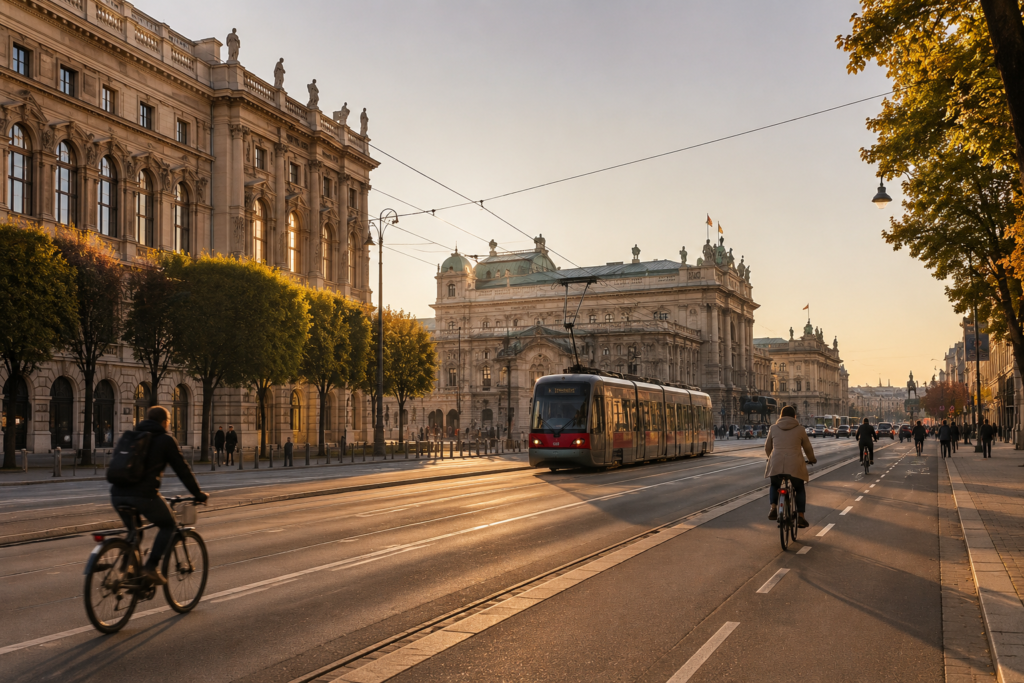
Berlin has long been the default European city in the imagination of Indian students and young professionals. It is large, globally recognised, relatively affordable by Western European standards, and home to one of the world’s most sought-after university systems. But over the past few years, a quieter shift has been taking shape.
A growing number of Indians — students, professionals, and those thinking about longer-term futures in Europe — are looking seriously at Vienna. Not as a consolation option. Not as a backup when Berlin doesn’t work out. But as a considered, deliberate first choice.
What is drawing them there, and does the case for Vienna hold up when you look closely?
Vienna Has Been Winning Quality of Life Rankings — Consistently
The most striking thing about Vienna’s reputation is how durable it is. This is not a city that appeared on one magazine’s list and disappeared the next year.
According to The Economist’s Global Liveability Index 2025, Vienna ranked 2nd among 173 cities worldwide. In the same year, Mercer’s Quality of Living City Ranking 2024 placed Vienna 2nd out of 241 cities globally. For student-focused rankings, QS Best Student Cities 2026 ranked Vienna 10th in the world — ahead of many more frequently discussed destinations.
These are not lifestyle surveys based on how photogenic a city is. They measure infrastructure, healthcare, political stability, safety, public transport, and access to education and services. Vienna scores consistently across all of them.
What makes this meaningful for Indians is not the bragging rights. It is what the rankings reflect in practice: a city that is clean, well-connected, genuinely safe, and organised in ways that make daily life significantly less stressful — particularly for someone arriving from outside Europe.
The City of Vienna’s own comparative data confirms a consistent podium finish across sustainability, public transport, hospital quality, and education access rankings, updated as recently as 2026.
The Cost Picture Is More Interesting Than People Assume
A common assumption is that Vienna must be more expensive than Berlin — given its rankings and reputation. The reality is more nuanced.
According to Numbeo’s cost of living data for May 2026, a one-bedroom apartment in Vienna’s city centre averages around €1,100 per month, compared to approximately €1,400 in Berlin — roughly 18 to 20% cheaper in housing costs. A monthly public transport pass in Vienna costs around €51, compared to approximately €91 in Berlin.
For a Malayalee student or young professional trying to plan financially, these differences are meaningful. At the current exchange rate of approximately ₹111 per euro, a city-centre apartment in Vienna runs around ₹1.22 lakh per month — which is significant, but noticeably below what the same quality of accommodation costs in Berlin. Total estimated living costs for a single person in Vienna — including rent, food, transport, and basics — come to roughly €1,350–1,400 per month (around ₹1.5 lakh per month). Berlin typically runs €1,550–1,600 or more.
For families back in Kerala thinking through the numbers: studying and living in Vienna over two or three years tends to cost meaningfully less than an equivalent period in Berlin, even before accounting for Vienna’s lower tuition fees. This is not an insignificant difference when the family is financing a child’s education abroad.
Austrian Universities Are More Affordable Than Most People Know
Austria operates a system of public universities with low, standardised tuition fees — even for non-EU students.
At institutions like the University of Vienna and TU Wien (Vienna University of Technology), non-EU international students pay a tuition fee of €726.72 per semester, plus the Austrian Students’ Union (ÖH — Österreichische Hochschüler:innenschaft) fee of approximately €24.70 per semester. That brings total semester fees to roughly €751 — around ₹83,000 per semester, or ₹1.65 lakh per year.
For comparison, private universities in India for an equivalent course often cost far more, and international private institutions in countries like the UK or the Netherlands can charge ten to fifteen times this amount per year.
Vienna alone is home to over 200,000 university students, making it one of the largest university cities in the German-speaking world — second only to Berlin in terms of scale. The University of Vienna, TU Wien, Vienna University of Economics and Business (WU Wien), and the Medical University of Vienna are all internationally recognised institutions.
A newer development worth noting: the Austria Focus India programme — a collaboration between TU Wien, TU Graz, and Montanuniversität Leoben — has been creating dedicated STEM master’s pathways for Indian graduates. According to reporting from April 2026, the programme had already enrolled around 200 Indian students, reflecting a deliberate effort by Austrian universities to build stronger connections with India’s technical education sector.
Vienna’s Geography Makes It a Hub, Not Just a City
This is the point that does not get discussed enough, and it is arguably the most strategic argument for Vienna.
Vienna sits at the centre of Central Europe. Within roughly two hours by train or a short flight, you can reach Munich, Prague, Budapest, Bratislava, and Zagreb. The Western Balkans — a region that has been growing steadily in economic significance — are closely connected to Vienna’s business ecosystem. According to Invest in Austria, Austria hosts 412 international company headquarters, with the majority choosing Vienna — partly because of this geographic position.
The Vienna Region’s business portal describes a location that offers access to over 500 million consumers within a three-hour flight radius, with Budapest just 45 minutes away by air. Several large multinationals — particularly in energy, finance, logistics, and technology — use Vienna precisely as a bridge between Western Europe and the markets of Central and Eastern Europe.
For an Indian professional who wants to build a career that extends across multiple European markets — perhaps working on a Germany-focused role but with responsibilities extending into Hungary or the Balkans — Vienna offers a genuinely different kind of position from what Berlin provides. Berlin is a great city for a career rooted in the German market. Vienna is a great city for a career that spans borders.
The Work Pathway: Austria’s Red-White-Red Card
Austria’s primary immigration route for skilled non-EU professionals is the Red-White-Red Card — a points-based system that assesses education, work experience, language skills, and age.
Highly qualified applicants — particularly those with degrees in STEM fields, finance, or healthcare — can score enough points to qualify for a Job Seeker Visa (valid for six months), which allows them to enter Austria and search for work. Once an employment offer is secured, they transition to the full Red-White-Red Card, valid for 24 months and tied to a specific employer.
After 21 months of qualifying employment, applicants become eligible for the Red-White-Red Card Plus — which provides unlimited access to Austria’s labour market, meaning the holder can change employers or sectors freely.
For 2026, Austria’s Skilled Workers Ordinance lists 64 nationwide shortage occupations, including software developers, electrical engineers, mechanical engineers, and nursing professionals — all fields where Indian-trained graduates are well-represented. The minimum gross monthly salary for qualifying key workers in 2026 is €3,465 — approximately ₹3.85 lakh per month — which, relative to Vienna’s cost of living, provides a reasonable starting point for someone building a professional life there.
The system is structured and documented clearly on migration.gv.at, Austria’s official immigration portal — a resource worth reading carefully before pursuing this path.
What the Growing Indian Presence in Austria Reflects
The numbers here are still modest compared to Germany, but they are moving in a consistent direction. According to data gathered from Austrian university sources and immigration records, over 3,500 Indian students were enrolled at Austrian universities in 2024–25 — a figure that represents roughly a 40% increase from five years earlier.
These students tend to concentrate in Vienna and Graz, in engineering, computer science, business, and healthcare programmes. Smaller but growing communities of Indian professionals are also establishing themselves — often in roles connected to international business, technology, and finance.
For Malayalee families specifically: the concerns that typically drive decision-making — cost transparency, safety, community presence, path to legal long-term stay — are all reasonably addressed by Vienna. Austria’s healthcare system is comprehensive. Public safety in Vienna is among the highest in Europe. And Austria’s immigration law, while detailed, provides a clear pathway from study to work to residency. The settled community of Indians in Vienna may be smaller than in London or Frankfurt, but it is organised and growing — with student associations, professional networks, and community events that provide a familiar support system for new arrivals.
A Note on Language
German is Austria’s official language, and most administrative processes — from registering your address (Meldezettel, pronounced “mel-de-tset-el”) to dealing with university bureaucracy — happen in German. This is a genuine practical consideration.
That said, Vienna’s university programmes increasingly offer English-taught master’s degrees, and the city’s international character means English is widely understood in professional and social settings. Learning conversational German will always improve your experience and your long-term career prospects in Austria — but arriving without it is not the barrier it once was, particularly in Vienna’s tech and business sectors.
The Honest Assessment
Vienna is not for everyone. If your primary goal is to enter Germany’s job market specifically, or to study at a German-language university in a larger, more international student city, Berlin or Munich may still be the better choice. Germany’s economy is larger, its Indian student and professional community is far more established, and its job market across most sectors runs deeper.
But if you are looking at Europe with a more open lens — thinking about quality of life alongside opportunity, considering a strategic base rather than a single-country focus, and willing to engage with a slightly less-discussed path — Vienna makes a serious, well-grounded case for itself. It is not a compromise. It is a different calculation, with different advantages.
The Indians who are choosing Vienna are not doing so because it is easier. They are doing so because, when they looked carefully, it was better — for them.
Conclusion
Berlin remains the headline. Vienna is the careful reader’s choice.
For Malayalee students weighing their options in Europe — particularly those in technical fields, healthcare, or international business — Vienna represents a combination that is hard to replicate elsewhere: low tuition fees, a world-leading quality of life, a central geographic position, and an immigration system that rewards qualification. The conversation around Austria in Kerala’s study-abroad circuit is growing, and the data suggests it will continue to.
The best decisions in this process usually come from looking past the obvious answer and asking whether a less-discussed one fits your actual situation better. Vienna rewards that kind of thinking.